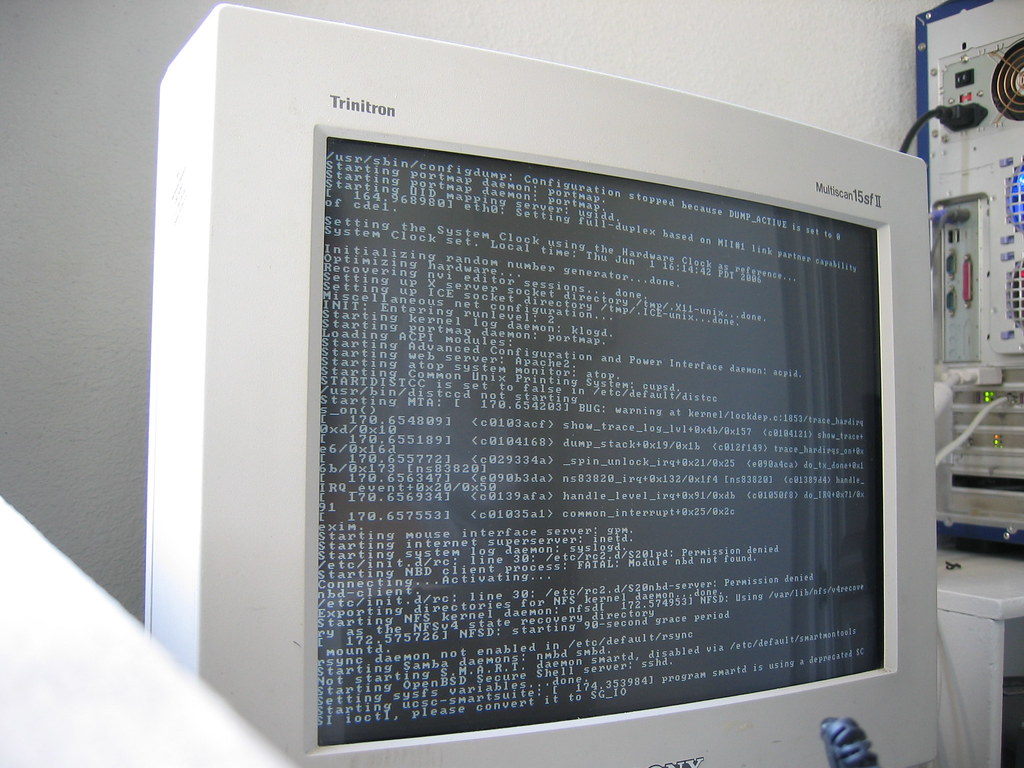
In general, lockdep warnings are intended to be non-fatal, so I have put in
various practical limits on internal data structure failure modes.  We haven't
had a /single/ lockdep-internal crash ever since lockdep went upstream [the
unwinder crashes are outside of lockdep], and that's largely due to the good
internal checks it does.

Recursion within the dependency graph is currently limited to 20, that's
probably not enough on some many-CPU boxes - this patch doubles it to 40.  I
have written the lockdep functions to have as small stackframes as possible,
so 40 should be OK too.  (The practical recursion limit should be somewhere
between 100 and 200 entries.  If we hit that then I'll change the algorithm to
be iteration-based.  Graph walking logic is so easy to program via recursion,
so i'd like to keep recursion as long as possible.)

Signed-off-by: Ingo Molnar <[email protected]>
Signed-off-by: Andrew Morton <[email protected]>
Signed-off-by: Linus Torvalds <[email protected]>
Bug reported and fixed by Tilman Schmidt <[email protected]>: if lockdep is
enabled then log messages make it to /var/log/messages belatedly.  The
reason is a missed wakeup of klogd.

Initially there was only a lockdep_internal() protection against lockdep
recursion within vprintk() - it grew the 'outer' lockdep_off()/on()
protection only later on.  But that lockdep_off() made the
release_console_sem() within vprintk() always happen under the
lockdep_internal() condition, causing the bug.

The right solution to remove the inner protection against recursion here -
the outer one is enough.

Signed-off-by: Ingo Molnar <[email protected]>
Cc: Tilman Schmidt <[email protected]>
Signed-off-by: Andrew Morton <[email protected]>
Signed-off-by: Linus Torvalds <[email protected]>
CONFIG_M386 turns on spinlock-based generic rwsems - which surprises the
semaphore.S rwsem stubs. Tested both with and without CONFIG_M386.

Reported-by: Klaus Knopper <[email protected]>
Triaged-by: Adrian Bunk <[email protected]>

Signed-off-by: Ingo Molnar <[email protected]>
Signed-off-by: Andi Kleen <[email protected]>
This patch converts all the i386 PIC controllers (except VisWS and Voyager,
which I could not test - but which should still work as old-style IRQ layers)
to the new and simpler irq-chip interrupt handling layer.

[[email protected]: build fix]
[[email protected]: enable fasteoi handler for i386 level-triggered IO-APIC irqs]
Signed-off-by: Ingo Molnar <[email protected]>
Signed-off-by: Thomas Gleixner <[email protected]>
Cc: Benjamin Herrenschmidt <[email protected]>
Cc: Roland Dreier <[email protected]>
Signed-off-by: Andrew Morton <[email protected]>
Signed-off-by: Linus Torvalds <[email protected]>
With CONFIG_DEBUG_LOCK_ALLOC turned off i was getting sporadic failures in
the locking self-test:

  ------------>
  | Locking API testsuite:
  ----------------------------------------------------------------------------
                                   | spin |wlock |rlock |mutex | wsem | rsem |
    --------------------------------------------------------------------------
                       A-A deadlock:  ok  |  ok  |  ok  |  ok  |  ok  |  ok  |
                   A-B-B-A deadlock:  ok  |  ok  |  ok  |  ok  |  ok  |  ok  |
               A-B-B-C-C-A deadlock:  ok  |  ok  |  ok  |  ok  |  ok  |  ok  |
               A-B-C-A-B-C deadlock:  ok  |  ok  |  ok  |  ok  |  ok  |  ok  |
           A-B-B-C-C-D-D-A deadlock:  ok  |FAILED|  ok  |  ok  |  ok  |  ok  |
           A-B-C-D-B-D-D-A deadlock:  ok  |  ok  |  ok  |  ok  |  ok  |  ok  |
           A-B-C-D-B-C-D-A deadlock:  ok  |  ok  |  ok  |  ok  |  ok  |FAILED|

after much debugging it turned out to be caused by accidental chain-hash
key collisions.  The current hash is:

 #define iterate_chain_key(key1, key2) \
	(((key1) << MAX_LOCKDEP_KEYS_BITS/2) ^ \
	((key1) >> (64-MAX_LOCKDEP_KEYS_BITS/2)) ^ \
 	(key2))

where MAX_LOCKDEP_KEYS_BITS is 11.  This hash is pretty good as it will
shift by 5 bits in every iteration, where every new ID 'mixed' into the
hash would have up to 11 bits.  But because there was a 6 bits overlap
between subsequent IDs and their high bits tended to be similar, there was
a chance for accidental chain-hash collision for a low number of locks
held.

the solution is to shift by 11 bits:

 #define iterate_chain_key(key1, key2) \
	(((key1) << MAX_LOCKDEP_KEYS_BITS) ^ \
	((key1) >> (64-MAX_LOCKDEP_KEYS_BITS)) ^ \
 	(key2))

This keeps the hash perfect up to 5 locks held, but even above that the
hash is still good because 11 bits is a relative prime to the total 64
bits, so a complete match will only occur after 64 held locks (which doesnt
happen in Linux).  Even after 5 locks held, entropy of the 5 IDs mixed into
the hash is already good enough so that overlap doesnt generate a colliding
hash ID.

with this change the false positives went away.

Signed-off-by: Ingo Molnar <[email protected]>
Signed-off-by: Andrew Morton <[email protected]>
Signed-off-by: Linus Torvalds <[email protected]>
while porting the -rt tree to 2.6.18-rc7 i noticed the following
screaming-IRQ scenario on an SMP system:

 2274  0Dn.:1 0.001ms: do_IRQ+0xc/0x103  <= (ret_from_intr+0x0/0xf)
 2274  0Dn.:1 0.010ms: do_IRQ+0xc/0x103  <= (ret_from_intr+0x0/0xf)
 2274  0Dn.:1 0.020ms: do_IRQ+0xc/0x103  <= (ret_from_intr+0x0/0xf)
 2274  0Dn.:1 0.029ms: do_IRQ+0xc/0x103  <= (ret_from_intr+0x0/0xf)
 2274  0Dn.:1 0.039ms: do_IRQ+0xc/0x103  <= (ret_from_intr+0x0/0xf)
 2274  0Dn.:1 0.048ms: do_IRQ+0xc/0x103  <= (ret_from_intr+0x0/0xf)
 2274  0Dn.:1 0.058ms: do_IRQ+0xc/0x103  <= (ret_from_intr+0x0/0xf)
 2274  0Dn.:1 0.068ms: do_IRQ+0xc/0x103  <= (ret_from_intr+0x0/0xf)
 2274  0Dn.:1 0.077ms: do_IRQ+0xc/0x103  <= (ret_from_intr+0x0/0xf)
 2274  0Dn.:1 0.087ms: do_IRQ+0xc/0x103  <= (ret_from_intr+0x0/0xf)
 2274  0Dn.:1 0.097ms: do_IRQ+0xc/0x103  <= (ret_from_intr+0x0/0xf)

as it turns out, the bug is caused by handle_level_irq(), which if it
races with another CPU already handling this IRQ, it _unmasks_ the IRQ
line on the way out. This is not how 2.6.17 works, and we introduced
this bug in one of the early genirq cleanups right before it went into
-mm. (the bug was not in the genirq patchset for a long time, and we
didnt notice the bug due to the lack of -rt rebase to the new genirq
code. -rt, and hardirq-preemption in particular opens up such races much
wider than anything else.)

Signed-off-by: Ingo Molnar <[email protected]>
Signed-off-by: Thomas Gleixner <[email protected]>
Acked-by: Benjamin Herrenschmidt <[email protected]>
Signed-off-by: Linus Torvalds <[email protected]>
Miles Lane reported the "BUG: MAX_STACK_TRACE_ENTRIES too low!" message,
which means that during normal use his system produced enough lockdep
events so that the 128-thousand entries stack-trace array got exhausted.
Double the size of the array.

Signed-off-by: Ingo Molnar <[email protected]>
Cc: Miles Lane <[email protected]>
Signed-off-by: Andrew Morton <[email protected]>
Signed-off-by: Linus Torvalds <[email protected]>
reiserfs seems to have another locking level layer for the i_mutex due to the
xattrs-are-a-directory thing.

Signed-off-by: Ingo Molnar <[email protected]>
Signed-off-by: Andrew Morton <[email protected]>
Signed-off-by: Linus Torvalds <[email protected]>
idescsi_pc_intr() uses local_irq_enable() in IRQ context: annotate it.

(this has no effect on kernels with lockdep disabled.  On kernels with lockdep
enabled this means that we wont actually disable interrupts, and the warning
message will go away as well.)

Signed-off-by: Ingo Molnar <[email protected]>
Signed-off-by: Andrew Morton <[email protected]>
Signed-off-by: Linus Torvalds <[email protected]>
Split off __icmpv6_socket's sk->sk_dst_lock class, because it gets
used from softirqs, which is safe for __icmpv6_sockets (because they
never get directly used via userspace syscalls), but unsafe for normal
sockets.

Has no effect on non-lockdep kernels.

Signed-off-by: Ingo Molnar <[email protected]>
Acked-by: Herbert Xu <[email protected]>
Signed-off-by: Andrew Morton <[email protected]>
Signed-off-by: David S. Miller <[email protected]>
Clean up ipc/msg.c to conform to Documentation/CodingStyle.  (before it was
an inconsistent hodepodge of various coding styles)

Verified that the before/after .o's are identical.

Signed-off-by: Ingo Molnar <[email protected]>
Signed-off-by: Andrew Morton <[email protected]>
Signed-off-by: Linus Torvalds <[email protected]>
Fix robust PI-futexes to be properly unlocked on unexpected exit.

For this to work the kernel has to know whether a futex is a PI or a
non-PI one, because the semantics are different.  Since the space in
relevant glibc data structures is extremely scarce, the best solution is
to encode the 'PI' information in bit 0 of the robust list pointer.
Existing (non-PI) glibc robust futexes have this bit always zero, so the
ABI is kept.  New glibc with PI-robust-futexes will set this bit.

Further fixes from Thomas Gleixner <[email protected]>

Signed-off-by: Ingo Molnar <[email protected]>
Signed-off-by: Ulrich Drepper <[email protected]>
Signed-off-by: Thomas Gleixner <[email protected]>
Signed-off-by: Linus Torvalds <[email protected]>
Fix pi_state->list handling bugs: list handling mishap, locking error.
Plus add more debug checks and fix a few style issues i noticed while
debugging this.

(reported by Ulrich Drepper and Jakub Jelinek.)

Signed-off-by: Ingo Molnar <[email protected]>
Signed-off-by: Linus Torvalds <[email protected]>
On platforms that have __ARCH_WANT_UNLOCKED_CTXSW set and want to implement
lock validator support there's a bug in rq->lock handling: in this case we
dont 'carry over' the runqueue lock into another task - but still we did a
spinlock_release() of it.  Fix this by making the spinlock_release() in
context_switch() dependent on !__ARCH_WANT_UNLOCKED_CTXSW.

(Reported by Ralf Baechle on MIPS, which has __ARCH_WANT_UNLOCKED_CTXSW.
This fixes a lockdep-internal BUG message on such platforms.)

Signed-off-by: Ingo Molnar <[email protected]>
Cc: Ralf Baechle <[email protected]>
Cc: Arjan van de Ven <[email protected]>
Signed-off-by: Andrew Morton <[email protected]>
Signed-off-by: Linus Torvalds <[email protected]>
Chandra Seetharaman reported SLAB crashes caused by the slab.c lock
annotation patch.  There is only one chunk of that patch that has a
material effect on the slab logic - this patch undoes that chunk.

This was confirmed to fix the slab problem by Chandra.

Signed-off-by: Ingo Molnar <[email protected]>
Tested-by: Chandra Seetharaman <[email protected]>
Signed-off-by: Linus Torvalds <[email protected]>
undo existing mm/slab.c lock-validator annotations, in preparation
of a new, less intrusive annotation patch.

Signed-off-by: Ingo Molnar <[email protected]>
Signed-off-by: Arjan van de Ven <[email protected]>
Signed-off-by: Linus Torvalds <[email protected]>
allyesconfig vmlinux size delta:

  text            data    bss     dec          filename
  20736884        6073834 3075176 29885894     vmlinux.before
  20721009        6073966 3075176 29870151     vmlinux.after

~18 bytes per callsite, 15K of text size (~0.1%) saved.

(as an added bonus this also removes a lockdep annotation.)

Signed-off-by: Ingo Molnar <[email protected]>
Signed-off-by: Andrew Morton <[email protected]>
Signed-off-by: Linus Torvalds <[email protected]>
lockdep_map is embedded into every lock, which blows up data structure
sizes all around the kernel.  Reduce the class-cache to be for the default
class only - that is used in 99.9% of the cases and even if we dont have a
class cached, the lookup in the class-hash is lockless.

This change reduces the per-lock dep_map overhead by 56 bytes on 64-bit
platforms and by 28 bytes on 32-bit platforms.

Signed-off-by: Ingo Molnar <[email protected]>
Cc: Arjan van de Ven <[email protected]>
Signed-off-by: Andrew Morton <[email protected]>
Signed-off-by: Linus Torvalds <[email protected]>
Barry K. Nathan reported the following lockdep warning:

[  197.343948] BUG: warning at kernel/lockdep.c:1856/trace_hardirqs_on()
[  197.345928]  [<c010329b>] show_trace_log_lvl+0x5b/0x105
[  197.346359]  [<c0103896>] show_trace+0x1b/0x20
[  197.346759]  [<c01038ed>] dump_stack+0x1f/0x24
[  197.347159]  [<c012efa2>] trace_hardirqs_on+0xfb/0x185
[  197.348873]  [<c029b009>] _spin_unlock_irq+0x24/0x2d
[  197.350620]  [<e09034e8>] do_tx_done+0x171/0x179 [ns83820]
[  197.350895]  [<e090445c>] ns83820_irq+0x149/0x20b [ns83820]
[  197.351166]  [<c013b4b8>] handle_IRQ_event+0x1d/0x52
[  197.353216]  [<c013c6c2>] handle_level_irq+0x97/0xe1
[  197.355157]  [<c01048c3>] do_IRQ+0x8b/0xac
[  197.355612]  [<c0102d9d>] common_interrupt+0x25/0x2c

this is caused because the ns83820 driver re-enables irq flags
in hardirq context.

While legal in theory, in practice it should only be done if the
hardware is really old and has some very high overhead in its ISR.
(such as PIO IDE)

For modern hardware, running ISRs with irqs enabled is discouraged,
because 1) new hardware is fast enough to not cause latency problems
2) allowing the nesting of hardware interrupts only 'spreads out'
the handling of the current ISR, causing extra cachemisses that would
otherwise not happen. Furthermore, on architectures where ISRs share
the kernel stacks, enabling interrupts in ISRs introduces a much
higher kernel-stack-nesting and thus kernel-stack-overflow risk.
3) not managing irq-flags via the _irqsave / _irqrestore variants
is dangerous: it's easy to forget whether one function nests inside
another, and irq flags might be mismanaged.

In the few cases where re-enabling interrupts in an ISR is considered
useful (and unavoidable), it has to be taught to the lock validator
explicitly (because the lock validator needs the "no ISR ever enables
hardirqs" artificial simplification to keep the IRQ/softirq locking
dependencies manageable).

This teaching is done via the explicit use local_irq_enable_in_hardirq().
On a stock kernel this maps to local_irq_enable(). If the lock validator
is enabled then this does not enable interrupts.

Now, the analysis of drivers/net/ns83820.c's irq flags use: the
irq-enabling in irq context seems intentional, but i dont think it's
justified. Furthermore, the driver suffers from problem #3 above too,
in ns83820_tx_timeout() it disables irqs via local_irq_save(), but
then it calls do_tx_done() which does a spin_unlock_irq(),
re-enabling for a function that does not expect it! While currently
this bug seems harmless (only some debug printout seems to be
affected by it), it's nevertheless something to be fixed.

So this patch makes the ns83820 ISR irq-flags-safe, and cleans up
do_tx_done() use and locking to avoid the ns83820_tx_timeout() bug.

From: Arjan van de Ven <[email protected]>

  ns83820_mib_isr takes the misc_lock in IRQ context.  All other places that
  do this in the ISR already use _irqsave versions, make this consistent at
  least.  At some point in the future someone should audit the driver to see
  if all _irqsave's in the ISR can go away, this is generally an iffy/fragile
  proposition though; for now get it safe, simple and consistent.

From: Arjan van de Ven <[email protected]>

ok this is a real driver deadlock:

The ns83820 driver enabled interrupts (by unlocking the misc_lock with
_irq) while still holding the rx_info.lock, which is required to be irq
safe since it's used in the ISR like this:
                writel(1, dev->base + IER);
                spin_unlock_irq(&dev->misc_lock);
                kick_rx(ndev);
                spin_unlock_irq(&dev->rx_info.lock);

This is can cause a deadlock if an irq was pending at the first
spin_unlock_irq already, or if one would hit during kick_rx().
Simply remove the first _irq solves this

Signed-off-by: Ingo Molnar <[email protected]>
Cc: Benjamin LaHaise <[email protected]>
Cc: Jeff Garzik <[email protected]>
Signed-off-by: Arjan van de Ven <[email protected]>
Signed-off-by: Andrew Morton <[email protected]>
Signed-off-by: Jeff Garzik <[email protected]>
convert:

 - runqueue_t to 'struct rq'
 - prio_array_t to 'struct prio_array'
 - migration_req_t to 'struct migration_req'

I was the one who added these but they are both against the kernel coding
style and also were used inconsistently at places.  So just get rid of them at
once, now that we are flushing the scheduler patch-queue anyway.

Conversion was mostly scripted, the result was reviewed and all secondary
whitespace and style impact (if any) was fixed up by hand.

Signed-off-by: Ingo Molnar <[email protected]>
Signed-off-by: Andrew Morton <[email protected]>
Signed-off-by: Linus Torvalds <[email protected]>
cleanup: remove task_t and convert all the uses to struct task_struct. I
introduced it for the scheduler anno and it was a mistake.

Conversion was mostly scripted, the result was reviewed and all
secondary whitespace and style impact (if any) was fixed up by hand.

Signed-off-by: Ingo Molnar <[email protected]>
Signed-off-by: Andrew Morton <[email protected]>
Signed-off-by: Linus Torvalds <[email protected]>
Clean up some of the impact of recent (and not so recent) scheduler
changes:

 - turning macros into nice inline functions
 - sanitizing and unifying variable definitions
 - whitespace, style consistency, 80-lines, comment correctness, spelling
   and curly braces police

Due to the macro hell and variable placement simplifications there's even 26
bytes of .text saved:

   text    data     bss     dec     hex filename
  25510    4153     192   29855    749f sched.o.before
  25484    4153     192   29829    7485 sched.o.after

[[email protected]: build fix]
Signed-off-by: Ingo Molnar <[email protected]>
Signed-off-by: Andrew Morton <[email protected]>
Signed-off-by: Linus Torvalds <[email protected]>
nv_do_nic_poll() is called from timer softirqs, which has interrupts enabled,
but np->lock might also be taken by some other interrupt context.

The driver does disable_irq() to get around this problem, so annotate the
disable_irq()/enable_irq() calls for lockdep.

Has no effect on non-lockdep kernels.

Signed-off-by: Ingo Molnar <[email protected]>
Signed-off-by: Arjan van de Ven <[email protected]>
Cc: Ayaz Abdulla <[email protected]>
Cc: Manfred Spraul <[email protected]>
Cc: Jeff Garzik <[email protected]>
Signed-off-by: Andrew Morton <[email protected]>
Signed-off-by: Linus Torvalds <[email protected]>
Teach sk_lock semantics to the lock validator.  In the softirq path the
slock has mutex_trylock()+mutex_unlock() semantics, in the process context
sock_lock() case it has mutex_lock()/mutex_unlock() semantics.

Thus we treat sock_owned_by_user() flagged areas as an exclusion area too,
not just those areas covered by a held sk_lock.slock.

Effect on non-lockdep kernels: minimal, sk_lock_sock_init() has been turned
into an inline function.

Signed-off-by: Ingo Molnar <[email protected]>
Cc: Arjan van de Ven <[email protected]>
Cc: "David S. Miller" <[email protected]>
Cc: Herbert Xu <[email protected]>
Signed-off-by: Andrew Morton <[email protected]>
Signed-off-by: Linus Torvalds <[email protected]>
lockdep needs to have the waitqueue lock initialized for on-stack
waitqueues implicitly initialized by DECLARE_COMPLETION().

Annotate mmc_wait_for_req()'s on-stack completion accordingly.

Has no effect on non-lockdep kernels.

Signed-off-by: Ingo Molnar <[email protected]>
Cc: Arjan van de Ven <[email protected]>
Cc: Russell King <[email protected]>
Signed-off-by: Andrew Morton <[email protected]>
Signed-off-by: Linus Torvalds <[email protected]>
Teach special (recursive) locking code to the lock validator.

Effects on non-lockdep kernels:

- the introduction of the following function variants:

  extern struct block_device *open_partition_by_devnum(dev_t, unsigned);

  extern int blkdev_put_partition(struct block_device *);

  static int
  blkdev_get_whole(struct block_device *bdev, mode_t mode, unsigned flags);

 which on non-lockdep are the same as open_by_devnum(), blkdev_put()
 and blkdev_get().

- a subclass parameter to do_open(). [unused on non-lockdep]

- a subclass parameter to __blkdev_put(), which is a new internal
  function for the main blkdev_put*() functions. [parameter unused
  on non-lockdep kernels, except for two sanity check WARN_ON()s]

these functions carry no semantical difference - they only express
object dependencies towards the lockdep subsystem.

Signed-off-by: Ingo Molnar <[email protected]>
Signed-off-by: Arjan van de Ven <[email protected]>
Cc: Neil Brown <[email protected]>
Signed-off-by: Andrew Morton <[email protected]>
Signed-off-by: Linus Torvalds <[email protected]>
Teach special (recursive) locking code to the lock validator.  Has no effect
on non-lockdep kernels.

Fix initialize-locks-via-memcpy assumptions.

Effects on non-lockdep kernels: the subclass nesting parameter is passed into
cache_free_alien() and __cache_free(), and turns one internal
kmem_cache_free() call into an open-coded __cache_free() call.

Signed-off-by: Ingo Molnar <[email protected]>
Signed-off-by: Arjan van de Ven <[email protected]>
Cc: Pekka Enberg <[email protected]>
Cc: Christoph Lameter <[email protected]>
Cc: Manfred Spraul <[email protected]>
Signed-off-by: Andrew Morton <[email protected]>
Signed-off-by: Linus Torvalds <[email protected]>
Teach special (per-filesystem) locking code to the lock validator.

Minimal effect on non-lockdep kernels: one extra parameter to alloc_super().

Signed-off-by: Ingo Molnar <[email protected]>
Signed-off-by: Arjan van de Ven <[email protected]>
Signed-off-by: Andrew Morton <[email protected]>
Signed-off-by: Linus Torvalds <[email protected]>
lockdep needs to have the waitqueue lock initialized for on-stack waitqueues
implicitly initialized by DECLARE_COMPLETION().  Annotate on-stack completions
accordingly.

Has no effect on non-lockdep kernels.

Signed-off-by: Ingo Molnar <[email protected]>
Signed-off-by: Andrew Morton <[email protected]>
Signed-off-by: Linus Torvalds <[email protected]>
Make use of local_irq_enable_in_hardirq() API to annotate places that enable
hardirqs in hardirq context.

Has no effect on non-lockdep kernels.

Signed-off-by: Ingo Molnar <[email protected]>
Signed-off-by: Arjan van de Ven <[email protected]>
Signed-off-by: Andrew Morton <[email protected]>
Signed-off-by: Linus Torvalds <[email protected]>
3c59x.c's vortex_timer() function knows that vp->lock can only be used by an
irq context that it disabled - and can hence take the vp->lock without
disabling hardirqs.  Teach lockdep about this.

Has no effect on non-lockdep kernels.

Signed-off-by: Ingo Molnar <[email protected]>
Cc: Arjan van de Ven <[email protected]>
Signed-off-by: Andrew Morton <[email protected]>
Signed-off-by: Linus Torvalds <[email protected]>
8390.c knows that ei_local->page_lock can only be used by an irq context that
it disabled - and can hence take the ->page_lock without disabling hardirqs.
Teach lockdep about this.

Has no effect on non-lockdep kernels.

Signed-off-by: Ingo Molnar <[email protected]>
Cc: Arjan van de Ven <[email protected]>
Cc: Jeff Garzik <[email protected]>
Signed-off-by: Andrew Morton <[email protected]>
Signed-off-by: Linus Torvalds <[email protected]>
NTFS uses lots of type-opaque objects which acquire their true identity
runtime - so the lock validator needs to be helped in a couple of places to
figure out object types.

Many thanks to Anton Altaparmakov for giving lots of explanations about NTFS
locking rules.

Has no effect on non-lockdep kernels.

Signed-off-by: Ingo Molnar <[email protected]>
Signed-off-by: Anton Altaparmakov <[email protected]>
Signed-off-by: Andrew Morton <[email protected]>
Signed-off-by: Linus Torvalds <[email protected]>
Teach special (recursive) locking code to the lock validator.  Has no effect
on non-lockdep kernels.

Signed-off-by: Ingo Molnar <[email protected]>
Signed-off-by: Arjan van de Ven <[email protected]>
Signed-off-by: Andrew Morton <[email protected]>
Signed-off-by: Linus Torvalds <[email protected]>
ieee1394 reuses the skb infrastructure of the networking code, and uses two
skb-head queues: ->pending_packet_queue and hpsbpkt_queue.  The latter is used
in the usual fashion: processed from a kernel thread.  The other one,
->pending_packet_queue is also processed from hardirq context (f.e.  in
hpsb_bus_reset()), which is not what the networking code usually does (which
completes from softirq or process context).  This locking assymetry can be
totally correct if done carefully, but it can also be dangerous if networking
helper functions are reused, which could assume traditional networking use.

It would probably be more robust to push this completion into a workqueue -
but technically the code can be 100% correct, and lockdep has to be taught
about it.  The solution is to split the ->pending_packet_queue skb-head->lock
class from the networking lock-class by using a private lock-validator key.

Has no effect on non-lockdep kernels.

Signed-off-by: Ingo Molnar <[email protected]>
Cc: Stefan Richter <[email protected]>
Cc: Jody McIntyre <[email protected]>
Cc: Ben Collins <[email protected]>
Signed-off-by: Andrew Morton <[email protected]>
Signed-off-by: Linus Torvalds <[email protected]>
Teach special (recursive) locking code to the lock validator.  Also splits
af_unix's sk_receive_queue.lock class from the other networking skb-queue
locks.  Has no effect on non-lockdep kernels.

Signed-off-by: Ingo Molnar <[email protected]>
Signed-off-by: Arjan van de Ven <[email protected]>
Cc: "David S. Miller" <[email protected]>
Signed-off-by: Andrew Morton <[email protected]>
Signed-off-by: Linus Torvalds <[email protected]>
Teach special (multi-initialized, per-address-family) locking code to the lock
validator.  Has no effect on non-lockdep kernels.

Signed-off-by: Ingo Molnar <[email protected]>
Signed-off-by: Arjan van de Ven <[email protected]>
Cc: "David S. Miller" <[email protected]>
Signed-off-by: Andrew Morton <[email protected]>
Signed-off-by: Linus Torvalds <[email protected]>
Teach special (recursive) locking code to the lock validator.  Has no effect
on non-lockdep kernels.

Signed-off-by: Ingo Molnar <[email protected]>
Signed-off-by: Arjan van de Ven <[email protected]>
Signed-off-by: Andrew Morton <[email protected]>
Signed-off-by: Linus Torvalds <[email protected]>
Teach per-CPU runqueue locks and recursive locking code to the lock validator.
 Has no effect on non-lockdep kernels.

Signed-off-by: Ingo Molnar <[email protected]>
Signed-off-by: Arjan van de Ven <[email protected]>
Signed-off-by: Andrew Morton <[email protected]>
Signed-off-by: Linus Torvalds <[email protected]>
Split the per-CPU timer base locks up into separate lock classes, because they
are used recursively.

Has no effect on non-lockdep kernels.

Signed-off-by: Ingo Molnar <[email protected]>
Signed-off-by: Arjan van de Ven <[email protected]>
Signed-off-by: Andrew Morton <[email protected]>
Signed-off-by: Linus Torvalds <[email protected]>
Teach special (multi-initialized) locking code to the lock validator.  Has no
effect on non-lockdep kernels.

Signed-off-by: Ingo Molnar <[email protected]>
Signed-off-by: Arjan van de Ven <[email protected]>
Cc: "David S. Miller" <[email protected]>
Signed-off-by: Andrew Morton <[email protected]>
Signed-off-by: Linus Torvalds <[email protected]>
Teach special (recursive) locking code to the lock validator.  Has no effect
on non-lockdep kernels.

Signed-off-by: Ingo Molnar <[email protected]>
Signed-off-by: Arjan van de Ven <[email protected]>
Signed-off-by: Andrew Morton <[email protected]>
Signed-off-by: Linus Torvalds <[email protected]>
Create one lock class for all waitqueue locks in the kernel.  Has no effect on
non-lockdep kernels.

Signed-off-by: Ingo Molnar <[email protected]>
Signed-off-by: Arjan van de Ven <[email protected]>
Signed-off-by: Andrew Morton <[email protected]>
Signed-off-by: Linus Torvalds <[email protected]>
Teach special (recursive) locking code to the lock validator.  Has no effect
on non-lockdep kernels.

Signed-off-by: Ingo Molnar <[email protected]>
Signed-off-by: Arjan van de Ven <[email protected]>
Signed-off-by: Andrew Morton <[email protected]>
Signed-off-by: Linus Torvalds <[email protected]>
Teach special (recursive) locking code to the lock validator.  Introduces
double_lock_hb() to unify double- hash-bucket-lock taking.

Signed-off-by: Ingo Molnar <[email protected]>
Signed-off-by: Arjan van de Ven <[email protected]>
Signed-off-by: Andrew Morton <[email protected]>
Signed-off-by: Linus Torvalds <[email protected]>
Teach special (recursive) locking code to the lock validator.  Has no effect
on non-lockdep kernels.

Signed-off-by: Ingo Molnar <[email protected]>
Signed-off-by: Arjan van de Ven <[email protected]>
Signed-off-by: Andrew Morton <[email protected]>
Signed-off-by: Linus Torvalds <[email protected]>
Teach special (recursive) locking code to the lock validator.  Has no effect
on non-lockdep kernels.

Signed-off-by: Ingo Molnar <[email protected]>
Signed-off-by: Arjan van de Ven <[email protected]>
Signed-off-by: Andrew Morton <[email protected]>
Signed-off-by: Linus Torvalds <[email protected]>
Teach special (dual-initialized) locking code to the lock validator.  Has no
effect on non-lockdep kernels.

Signed-off-by: Ingo Molnar <[email protected]>
Signed-off-by: Arjan van de Ven <[email protected]>
Cc: Russell King <[email protected]>
Signed-off-by: Andrew Morton <[email protected]>
Signed-off-by: Linus Torvalds <[email protected]>
Make printk()-ing from within the lock validation code safer by using the
lockdep-recursion counter.

Signed-off-by: Ingo Molnar <[email protected]>
Signed-off-by: Arjan van de Ven <[email protected]>
Signed-off-by: Andrew Morton <[email protected]>
Signed-off-by: Linus Torvalds <[email protected]>
Disable SMP alternatives fixups (the patching in of NOPs on 1-CPU systems) if
the lock validator is enabled: there is a binutils section handling bug that
causes corrupted instructions when UP instructions are patched in.

Signed-off-by: Ingo Molnar <[email protected]>
Signed-off-by: Arjan van de Ven <[email protected]>
Signed-off-by: Andrew Morton <[email protected]>
Signed-off-by: Linus Torvalds <[email protected]>
x86_64 uses spinlocks very early - earlier than start_kernel().  So call
lockdep_init() from the arch setup code.

Signed-off-by: Ingo Molnar <[email protected]>
Signed-off-by: Arjan van de Ven <[email protected]>
Cc: Andi Kleen <[email protected]>
Signed-off-by: Andrew Morton <[email protected]>
Signed-off-by: Linus Torvalds <[email protected]>
Use the lock validator framework to prove spinlock and rwlock locking
correctness.

Signed-off-by: Ingo Molnar <[email protected]>
Signed-off-by: Arjan van de Ven <[email protected]>
Signed-off-by: Andrew Morton <[email protected]>
Signed-off-by: Linus Torvalds <[email protected]>
Lock validator /proc/lockdep and /proc/lockdep_stats support.
(FIXME: should go into debugfs)

Signed-off-by: Ingo Molnar <[email protected]>
Signed-off-by: Arjan van de Ven <[email protected]>
Signed-off-by: Andrew Morton <[email protected]>
Signed-off-by: Linus Torvalds <[email protected]>
From: Ingo Molnar <[email protected]>

lockdep so far only allowed read-recursion for the same lock instance.
This is enough in the overwhelming majority of cases, but a hostap case
triggered and reported by Miles Lane relies on same-class
different-instance recursion.  So we relax the restriction on read-lock
recursion.

(This change does not allow rwsem read-recursion, which is still
forbidden.)

Signed-off-by: Ingo Molnar <[email protected]>
Signed-off-by: Andrew Morton <[email protected]>
Signed-off-by: Linus Torvalds <[email protected]>
Do 'make oldconfig' and accept all the defaults for new config options -
reboot into the kernel and if everything goes well it should boot up fine and
you should have /proc/lockdep and /proc/lockdep_stats files.

Typically if the lock validator finds some problem it will print out
voluminous debug output that begins with "BUG: ..." and which syslog output
can be used by kernel developers to figure out the precise locking scenario.

What does the lock validator do?  It "observes" and maps all locking rules as
they occur dynamically (as triggered by the kernel's natural use of spinlocks,
rwlocks, mutexes and rwsems).  Whenever the lock validator subsystem detects a
new locking scenario, it validates this new rule against the existing set of
rules.  If this new rule is consistent with the existing set of rules then the
new rule is added transparently and the kernel continues as normal.  If the
new rule could create a deadlock scenario then this condition is printed out.

When determining validity of locking, all possible "deadlock scenarios" are
considered: assuming arbitrary number of CPUs, arbitrary irq context and task
context constellations, running arbitrary combinations of all the existing
locking scenarios.  In a typical system this means millions of separate
scenarios.  This is why we call it a "locking correctness" validator - for all
rules that are observed the lock validator proves it with mathematical
certainty that a deadlock could not occur (assuming that the lock validator
implementation itself is correct and its internal data structures are not
corrupted by some other kernel subsystem).  [see more details and conditionals
of this statement in include/linux/lockdep.h and
Documentation/lockdep-design.txt]

Furthermore, this "all possible scenarios" property of the validator also
enables the finding of complex, highly unlikely multi-CPU multi-context races
via single single-context rules, increasing the likelyhood of finding bugs
drastically.  In practical terms: the lock validator already found a bug in
the upstream kernel that could only occur on systems with 3 or more CPUs, and
which needed 3 very unlikely code sequences to occur at once on the 3 CPUs.
That bug was found and reported on a single-CPU system (!).  So in essence a
race will be found "piecemail-wise", triggering all the necessary components
for the race, without having to reproduce the race scenario itself!  In its
short existence the lock validator found and reported many bugs before they
actually caused a real deadlock.

To further increase the efficiency of the validator, the mapping is not per
"lock instance", but per "lock-class".  For example, all struct inode objects
in the kernel have inode->inotify_mutex.  If there are 10,000 inodes cached,
then there are 10,000 lock objects.  But ->inotify_mutex is a single "lock
type", and all locking activities that occur against ->inotify_mutex are
"unified" into this single lock-class.  The advantage of the lock-class
approach is that all historical ->inotify_mutex uses are mapped into a single
(and as narrow as possible) set of locking rules - regardless of how many
different tasks or inode structures it took to build this set of rules.  The
set of rules persist during the lifetime of the kernel.

To see the rough magnitude of checking that the lock validator does, here's a
portion of /proc/lockdep_stats, fresh after bootup:

 lock-classes:                            694 [max: 2048]
 direct dependencies:                  1598 [max: 8192]
 indirect dependencies:               17896
 all direct dependencies:             16206
 dependency chains:                    1910 [max: 8192]
 in-hardirq chains:                      17
 in-softirq chains:                     105
 in-process chains:                    1065
 stack-trace entries:                 38761 [max: 131072]
 combined max dependencies:         2033928
 hardirq-safe locks:                     24
 hardirq-unsafe locks:                  176
 softirq-safe locks:                     53
 softirq-unsafe locks:                  137
 irq-safe locks:                         59
 irq-unsafe locks:                      176

The lock validator has observed 1598 actual single-thread locking patterns,
and has validated all possible 2033928 distinct locking scenarios.

More details about the design of the lock validator can be found in
Documentation/lockdep-design.txt, which can also found at:

   http://redhat.com/~mingo/lockdep-patches/lockdep-design.txt

[[email protected]: cleanups]
Signed-off-by: Ingo Molnar <[email protected]>
Signed-off-by: Arjan van de Ven <[email protected]>
Signed-off-by: Adrian Bunk <[email protected]>
Signed-off-by: Andrew Morton <[email protected]>
Signed-off-by: Linus Torvalds <[email protected]>
Introduce DEBUG_LOCKING_API_SELFTESTS, which uses the generic lock debugging
code's silent-failure feature to run a matrix of testcases.  There are 210
testcases currently:

  +-----------------------
  | Locking API testsuite:
  +------------------------------+------+------+------+------+------+------+
                                 | spin |wlock |rlock |mutex | wsem | rsem |
  -------------------------------+------+------+------+------+------+------+
                     A-A deadlock:  ok  |  ok  |  ok  |  ok  |  ok  |  ok  |
                 A-B-B-A deadlock:  ok  |  ok  |  ok  |  ok  |  ok  |  ok  |
             A-B-B-C-C-A deadlock:  ok  |  ok  |  ok  |  ok  |  ok  |  ok  |
             A-B-C-A-B-C deadlock:  ok  |  ok  |  ok  |  ok  |  ok  |  ok  |
         A-B-B-C-C-D-D-A deadlock:  ok  |  ok  |  ok  |  ok  |  ok  |  ok  |
         A-B-C-D-B-D-D-A deadlock:  ok  |  ok  |  ok  |  ok  |  ok  |  ok  |
         A-B-C-D-B-C-D-A deadlock:  ok  |  ok  |  ok  |  ok  |  ok  |  ok  |
                    double unlock:  ok  |  ok  |  ok  |  ok  |  ok  |  ok  |
                 bad unlock order:  ok  |  ok  |  ok  |  ok  |  ok  |  ok  |
  --------------------------------------+------+------+------+------+------+
              recursive read-lock:             |  ok  |             |  ok  |
  --------------------------------------+------+------+------+------+------+
                non-nested unlock:  ok  |  ok  |  ok  |  ok  |
  --------------------------------------+------+------+------+
     hard-irqs-on + irq-safe-A/12:  ok  |  ok  |  ok  |
     soft-irqs-on + irq-safe-A/12:  ok  |  ok  |  ok  |
     hard-irqs-on + irq-safe-A/21:  ok  |  ok  |  ok  |
     soft-irqs-on + irq-safe-A/21:  ok  |  ok  |  ok  |
       sirq-safe-A => hirqs-on/12:  ok  |  ok  |  ok  |
       sirq-safe-A => hirqs-on/21:  ok  |  ok  |  ok  |
         hard-safe-A + irqs-on/12:  ok  |  ok  |  ok  |
         soft-safe-A + irqs-on/12:  ok  |  ok  |  ok  |
         hard-safe-A + irqs-on/21:  ok  |  ok  |  ok  |
         soft-safe-A + irqs-on/21:  ok  |  ok  |  ok  |
    hard-safe-A + unsafe-B #1/123:  ok  |  ok  |  ok  |
    soft-safe-A + unsafe-B #1/123:  ok  |  ok  |  ok  |
    hard-safe-A + unsafe-B #1/132:  ok  |  ok  |  ok  |
    soft-safe-A + unsafe-B #1/132:  ok  |  ok  |  ok  |
    hard-safe-A + unsafe-B #1/213:  ok  |  ok  |  ok  |
    soft-safe-A + unsafe-B #1/213:  ok  |  ok  |  ok  |
    hard-safe-A + unsafe-B #1/231:  ok  |  ok  |  ok  |
    soft-safe-A + unsafe-B #1/231:  ok  |  ok  |  ok  |
    hard-safe-A + unsafe-B #1/312:  ok  |  ok  |  ok  |
    soft-safe-A + unsafe-B #1/312:  ok  |  ok  |  ok  |
    hard-safe-A + unsafe-B #1/321:  ok  |  ok  |  ok  |
    soft-safe-A + unsafe-B #1/321:  ok  |  ok  |  ok  |
    hard-safe-A + unsafe-B #2/123:  ok  |  ok  |  ok  |
    soft-safe-A + unsafe-B #2/123:  ok  |  ok  |  ok  |
    hard-safe-A + unsafe-B #2/132:  ok  |  ok  |  ok  |
    soft-safe-A + unsafe-B #2/132:  ok  |  ok  |  ok  |
    hard-safe-A + unsafe-B #2/213:  ok  |  ok  |  ok  |
    soft-safe-A + unsafe-B #2/213:  ok  |  ok  |  ok  |
    hard-safe-A + unsafe-B #2/231:  ok  |  ok  |  ok  |
    soft-safe-A + unsafe-B #2/231:  ok  |  ok  |  ok  |
    hard-safe-A + unsafe-B #2/312:  ok  |  ok  |  ok  |
    soft-safe-A + unsafe-B #2/312:  ok  |  ok  |  ok  |
    hard-safe-A + unsafe-B #2/321:  ok  |  ok  |  ok  |
    soft-safe-A + unsafe-B #2/321:  ok  |  ok  |  ok  |
      hard-irq lock-inversion/123:  ok  |  ok  |  ok  |
      soft-irq lock-inversion/123:  ok  |  ok  |  ok  |
      hard-irq lock-inversion/132:  ok  |  ok  |  ok  |
      soft-irq lock-inversion/132:  ok  |  ok  |  ok  |
      hard-irq lock-inversion/213:  ok  |  ok  |  ok  |
      soft-irq lock-inversion/213:  ok  |  ok  |  ok  |
      hard-irq lock-inversion/231:  ok  |  ok  |  ok  |
      soft-irq lock-inversion/231:  ok  |  ok  |  ok  |
      hard-irq lock-inversion/312:  ok  |  ok  |  ok  |
      soft-irq lock-inversion/312:  ok  |  ok  |  ok  |
      hard-irq lock-inversion/321:  ok  |  ok  |  ok  |
      soft-irq lock-inversion/321:  ok  |  ok  |  ok  |
      hard-irq read-recursion/123:  ok  |
      soft-irq read-recursion/123:  ok  |
      hard-irq read-recursion/132:  ok  |
      soft-irq read-recursion/132:  ok  |
      hard-irq read-recursion/213:  ok  |
      soft-irq read-recursion/213:  ok  |
      hard-irq read-recursion/231:  ok  |
      soft-irq read-recursion/231:  ok  |
      hard-irq read-recursion/312:  ok  |
      soft-irq read-recursion/312:  ok  |
      hard-irq read-recursion/321:  ok  |
      soft-irq read-recursion/321:  ok  |
  --------------------------------+-----+----------------
  Good, all 210 testcases passed! |
  --------------------------------+

Signed-off-by: Ingo Molnar <[email protected]>
Signed-off-by: Arjan van de Ven <[email protected]>
Signed-off-by: Andrew Morton <[email protected]>
Signed-off-by: Linus Torvalds <[email protected]>
Clean up the x86 irqflags.h file:

 - macro => inline function transformation
 - simplifications
 - style fixes

Signed-off-by: Ingo Molnar <[email protected]>
Signed-off-by: Arjan van de Ven <[email protected]>
Signed-off-by: Andrew Morton <[email protected]>
Signed-off-by: Linus Torvalds <[email protected]>
Accurate hard-IRQ-flags and softirq-flags state tracing.

This allows us to attach extra functionality to IRQ flags on/off
events (such as trace-on/off).

Signed-off-by: Ingo Molnar <[email protected]>
Signed-off-by: Arjan van de Ven <[email protected]>
Signed-off-by: Andrew Morton <[email protected]>
Signed-off-by: Linus Torvalds <[email protected]>
Framework to generate and save stacktraces quickly, without printing anything
to the console.  x86_64 support.

Signed-off-by: Ingo Molnar <[email protected]>
Signed-off-by: Arjan van de Ven <[email protected]>
Cc: Andi Kleen <[email protected]>
Signed-off-by: Andrew Morton <[email protected]>
Signed-off-by: Linus Torvalds <[email protected]>
Framework to generate and save stacktraces quickly, without printing anything
to the console.  i386 support.

Signed-off-by: Ingo Molnar <[email protected]>
Signed-off-by: Arjan van de Ven <[email protected]>
Signed-off-by: Andrew Morton <[email protected]>
Signed-off-by: Linus Torvalds <[email protected]>
Framework to generate and save stacktraces quickly, without printing anything
to the console.

Signed-off-by: Ingo Molnar <[email protected]>
Signed-off-by: Arjan van de Ven <[email protected]>
Signed-off-by: Andrew Morton <[email protected]>
Signed-off-by: Linus Torvalds <[email protected]>
Remove CONFIG_STACK_BACKTRACE_COLS.

This feature didnt work out: instead of making kernel debugging more
efficient, it produces much harder to read stacktraces!  Check out this trace
for example:

  http://static.flickr.com/47/158326090_35d0129147_b_d.jpg

That backtrace could have been printed much nicer as a one-entry-per-line
thing, taking the same amount of screen real-estate.

Plus we remove 30 lines of kernel code as well.

Signed-off-by: Ingo Molnar <[email protected]>
Signed-off-by: Andrew Morton <[email protected]>
Signed-off-by: Linus Torvalds <[email protected]>
Locking init improvement:

 - introduce and use __SPIN_LOCK_UNLOCKED for array initializations,
   to pass in the name string of locks, used by debugging

Signed-off-by: Ingo Molnar <[email protected]>
Signed-off-by: Arjan van de Ven <[email protected]>
Signed-off-by: Andrew Morton <[email protected]>
Signed-off-by: Linus Torvalds <[email protected]>
Work around weird section nesting build bug causing smp-alternatives failures
under certain circumstances.

Signed-off-by: Ingo Molnar <[email protected]>
Signed-off-by: Arjan van de Ven <[email protected]>
Signed-off-by: Andrew Morton <[email protected]>
Signed-off-by: Linus Torvalds <[email protected]>
Generic lock debugging:

 - generalized lock debugging framework. For example, a bug in one lock
   subsystem turns off debugging in all lock subsystems.

 - got rid of the caller address passing (__IP__/__IP_DECL__/etc.) from
   the mutex/rtmutex debugging code: it caused way too much prototype
   hackery, and lockdep will give the same information anyway.

 - ability to do silent tests

 - check lock freeing in vfree too.

 - more finegrained debugging options, to allow distributions to
   turn off more expensive debugging features.

There's no separate 'held mutexes' list anymore - but there's a 'held locks'
stack within lockdep, which unifies deadlock detection across all lock
classes.  (this is independent of the lockdep validation stuff - lockdep first
checks whether we are holding a lock already)

Here are the current debugging options:

CONFIG_DEBUG_MUTEXES=y
CONFIG_DEBUG_LOCK_ALLOC=y

which do:

 config DEBUG_MUTEXES
          bool "Mutex debugging, basic checks"

 config DEBUG_LOCK_ALLOC
         bool "Detect incorrect freeing of live mutexes"

Signed-off-by: Ingo Molnar <[email protected]>
Signed-off-by: Arjan van de Ven <[email protected]>
Signed-off-by: Andrew Morton <[email protected]>
Signed-off-by: Linus Torvalds <[email protected]>
With the lock validator we detect mutex deadlocks (and more), the mutex
deadlock checking code is both redundant and slower.  So remove it.

Signed-off-by: Ingo Molnar <[email protected]>
Signed-off-by: Andrew Morton <[email protected]>
Signed-off-by: Linus Torvalds <[email protected]>
Rename DEBUG_WARN_ON() to the less generic DEBUG_LOCKS_WARN_ON() name, so that
it's clear that this is a lock-debugging internal mechanism.

Signed-off-by: Ingo Molnar <[email protected]>
Signed-off-by: Andrew Morton <[email protected]>
Signed-off-by: Linus Torvalds <[email protected]>
RWSEM_DEBUG used to be a printk based 'tracing' facility, probably used for
very early prototypes of the rwsem code.  Remove it.

Signed-off-by: Ingo Molnar <[email protected]>
Signed-off-by: Andrew Morton <[email protected]>
Signed-off-by: Linus Torvalds <[email protected]>
lockdep needs to have the waitqueue lock initialized for on-stack waitqueues
implicitly initialized by DECLARE_COMPLETION().  Introduce the API.

Signed-off-by: Ingo Molnar <[email protected]>
Signed-off-by: Andrew Morton <[email protected]>
Signed-off-by: Linus Torvalds <[email protected]>
Introduce local_irq_enable_in_hardirq() API.  It is currently aliased to
local_irq_enable(), hence has no functional effects.

This API will be used by lockdep, but even without lockdep this will better
document places in the kernel where a hardirq context enables hardirqs.

Signed-off-by: Ingo Molnar <[email protected]>
Signed-off-by: Andrew Morton <[email protected]>
Signed-off-by: Linus Torvalds <[email protected]>
lockdep wants to use the disable_irq()/enable_irq() prototypes before they are
provied by the platform's asm/irq.h.  So move them out of the
CONFIG_GENERIC_HARDIRQS define - all architectures have a common prototype for
this anyway.

Add special lockdep variants of irq line disabling/enabling.

These should be used for locking constructs that know that a particular irq
context which is disabled, and which is the only irq-context user of a lock,
that it's safe to take the lock in the irq-disabled section without disabling
hardirqs.

[[email protected]: build fix]
Signed-off-by: Ingo Molnar <[email protected]>
Cc: Thomas Gleixner <[email protected]>
Signed-off-by: Andrew Morton <[email protected]>
Signed-off-by: Linus Torvalds <[email protected]>
 Ingo Molnar